London Local Authorities: SEN2 Return Production and SEND Data Support


What was the challenge London local authorities were facing
Since the move to a person-level SEN2 collection in 2023, local authorities have faced additional challenges and complexities around this statutory data return. The volume of data required has increased significantly, and the person-level reporting has introduced higher expectations around the consistency, accuracy, and auditability at the individual-child level. For many local authorities, this has exposed underlying data quality and data collection issues that were less visible under the previous aggregate collections.
Many local authorities are also migrating between SEND case management systems to better meet these demands, all while continuing to deliver their statutory services. Data must be transferred quickly and accurately, records need to be matched correctly, and good practice in using the new systems must be established to avoid disruption to statutory reporting.
These challenges are set against the backdrop of upcoming SEND reforms, which are expected to place further requirements on local authorities to collect, manage and share more detailed and timely SEND data. Therefore, having robust data systems and well-embedded processes in place is vital.
What we did
We’ve worked with multiple London local authorities to produce and quality assure their person-level SEN2 returns, taking responsibility for the end-to-end process while ensuring local authorities retained ownership and full understanding of the data being submitted. This included bringing together data from multiple teams and sources, resolving inconsistencies, and applying detailed validation checks to ensure submissions met DfE requirements. Where any issues were identified, we worked with the relevant teams to help them understand the cause, and set up processes to mitigate these in the future.
Ahead of submission, we provided early insights into what the published SEN2 figures were likely to show and how these compare with data from previous years. This allowed senior leaders and SEND teams to sense check trends and avoid any surprises when the data was released publicly.
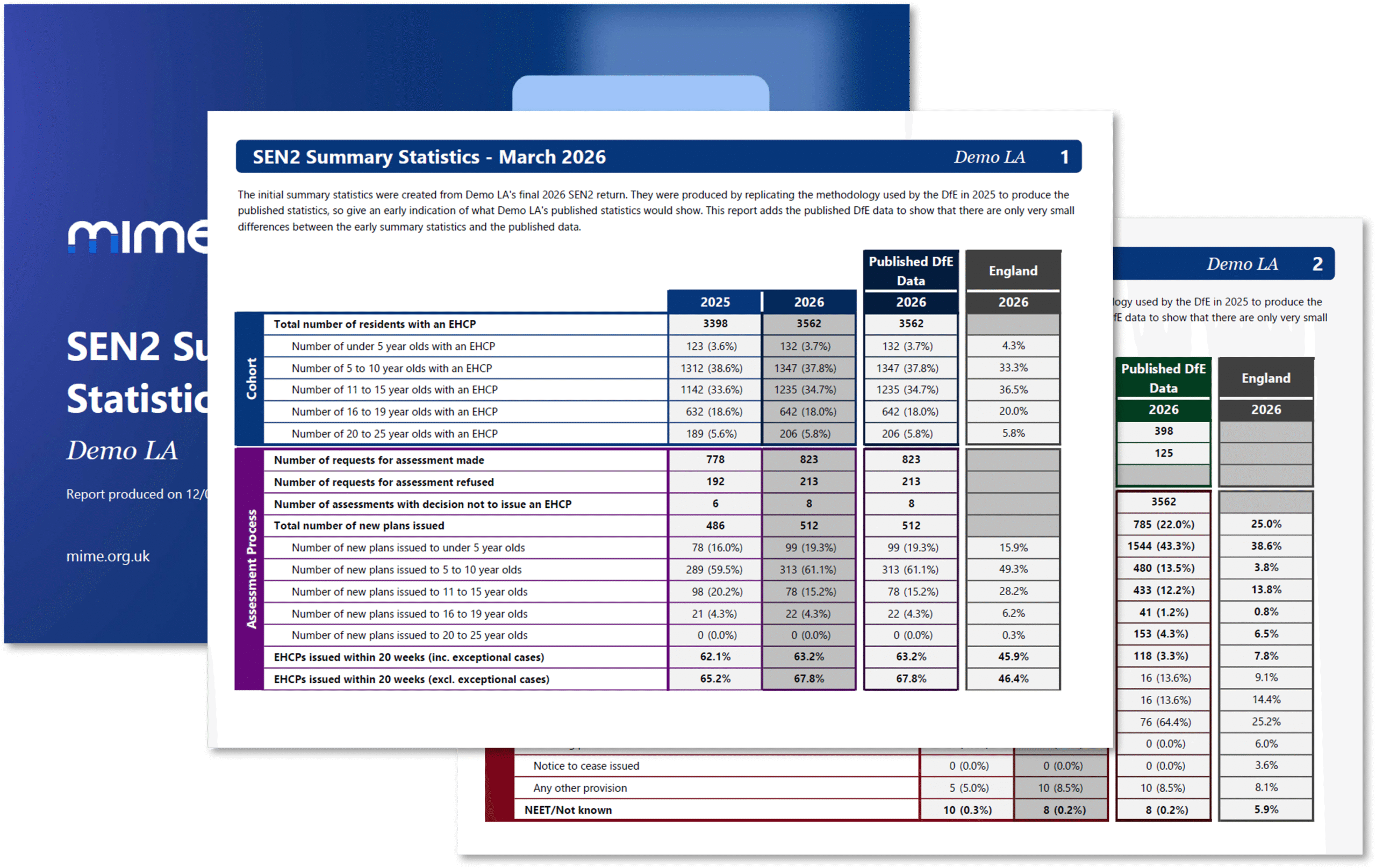
We’ve also supported local authorities undergoing SEND case management system migrations, quality assuring the transfer of data between systems and helping teams strengthen their internal data processes, improving how data is uploaded, maintained and reviewed throughout the year. To support this, we’ve produced mock SEN2 returns at regular points during the year, giving local authorities early visibility of how their data was evolving and highlighted any gaps or data quality issues. This provided teams plenty of time to correct these well before the statutory deadline.
The impact of our work
As a result of the work we have done, the local authorities we have worked with have been able to:
- Submit their statutory SEN2 returns on time and to a high standard, with increased confidence in the accuracy of their data
- Develop more efficient and repeatable internal processes for producing future data returns
- Reduce the burden on internal teams, both during the production of SEN2 returns and during complex system migrations
- Respond more quickly to data queries, supported by clearer audit trails and better understood systems and datasets
Crucially, local authorities are now in a better position to handle additional data requirements that may come as a result of upcoming reforms to the SEND system.
“Without the help of the team at Mime we would not have been able to identify some of the issues with the aggregate numbers… The DfE Collect [service] has no tools in-built for this, so without the Mime tool we wouldn’t even be aware of some of these issues.”
Local Authority SEND Performance Analyst


