
At Mime, we’ve always believed that data is more than just numbers on a spreadsheet, it’s a powerful lens through which we can understand our most pressing social issues.
Last month, we were honoured to bring this message to the Association of Charitable Foundations (ACF) Annual Conference. This year’s theme, “Future-ready foundations: building resilience, relevance and readiness,” set the stage for vital conversations about how the sector can adapt to a rapidly changing landscape.
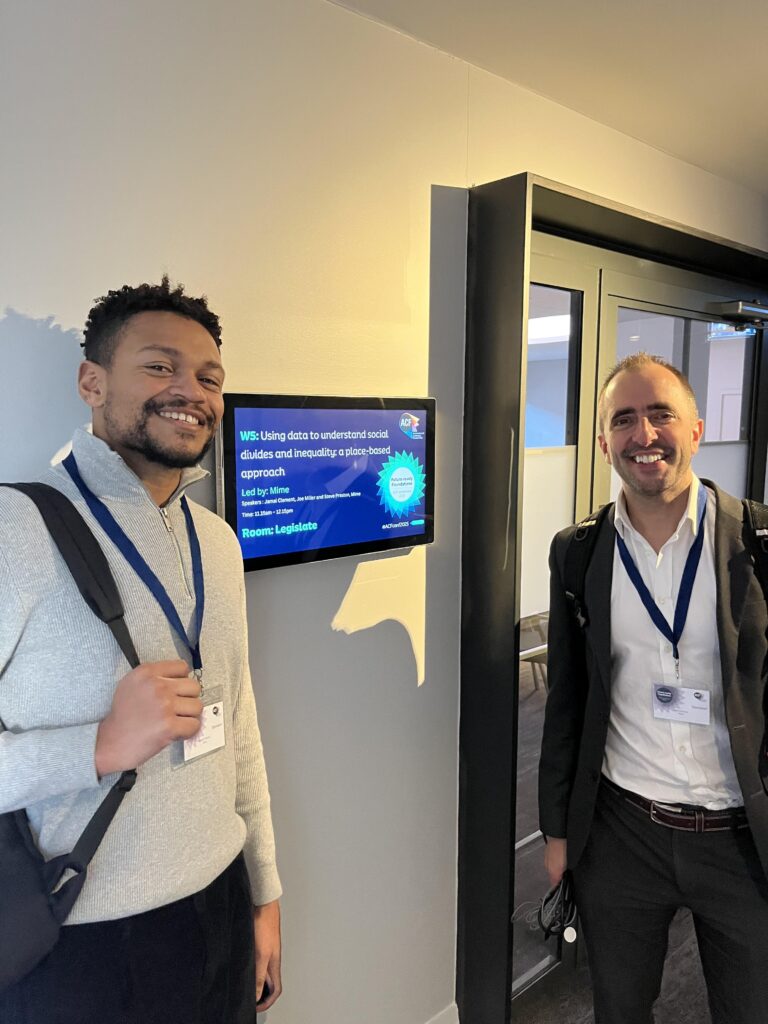
We were invited to lead a workshop on using data to make informed decisions, and the response was overwhelming. Not only was our workshop the most popular of the day, but it was so oversubscribed that we were moved to a bigger room to accommodate everyone!
Our hands-on workshop, “Using Data to Understand Social Divides and Inequality,” was designed specifically for decision-makers. including to explore a range of data tools we’ve built for previous projects. We wanted to move beyond the technical jargon and show foundations how to use data to uncover local trends and identify drivers of inequality.
Drawing from powerful sources like the National Pupil Database (NPD) and the Longitudinal Educational Outcomes (LEO) dataset, we explored how a “place-based lens” can reveal hidden patterns of inequality. By looking at data through the geography and demographics of specific communities, foundations can see early warning signs that day-to-day casework might miss.
Key takeaways and practical tips
For those who couldn’t make it into the room, here are some of the key messages we shared:
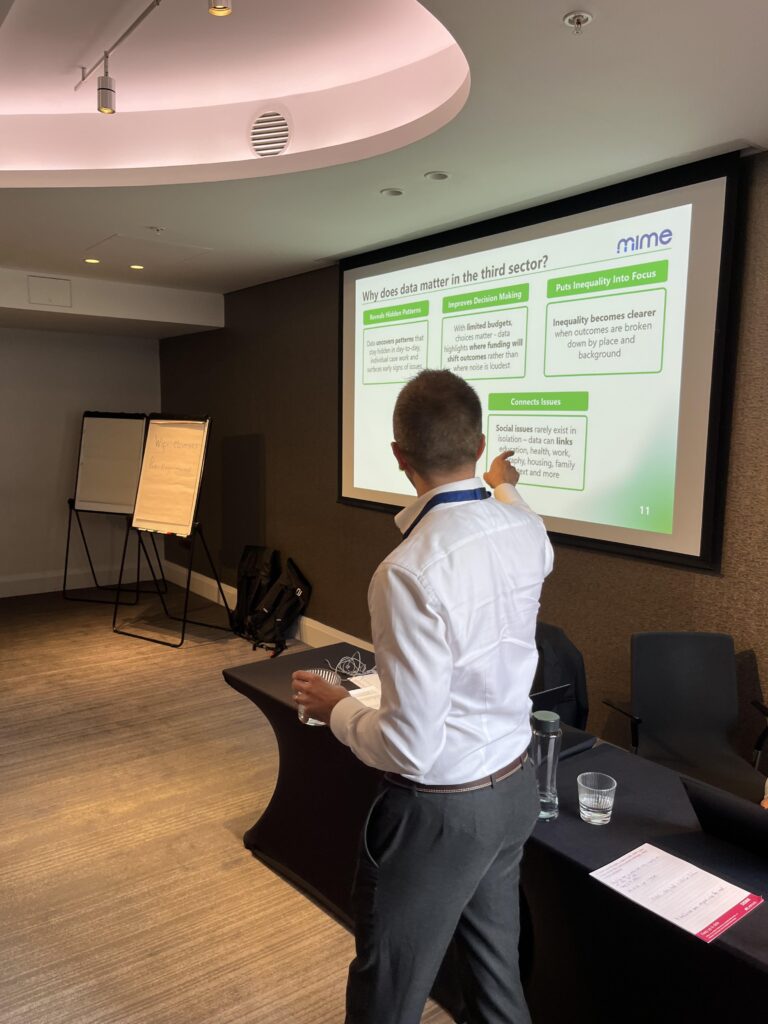
Why is “Data-Led” the Future of Foundations? In a world of limited budgets and growing complexity, robust evidence can help target interventions on where they will have the greatest impact. During the session, we highlighted five key reasons why a data-led approach is essential for any future-ready foundation:
-
Uncovers Hidden Patterns: Surface issues before they become crises.
-
Improves Decision Making: Target resources with evidence, not just “gut instinct.”
-
Puts Inequality into Focus: Highlight disparities across different demographic groups and places.
-
Challenges Assumptions: Ensure your strategy is grounded in reality, not just local narratives.
-
Connects Issues: See how education, health, housing, and work are inextricably linked.
And here are our top tips for becoming a more data-informed foundation decision-maker:
-
You don’t need to be a statistician: Data is for everyone. Start with descriptive statistics for quick insights, and don’t worry about complex analytical techniques when you start researching.
-
Benchmarking is your best friend: Use national, regional, or “statistical neighbour” comparisons to understand how an area is really performing.
-
Visualisation matters: Clear, purposeful presentation makes data accessible and tells a story that inspires action.
-
Explore free tools: There is a wealth of public data available. Check out Explore Education Statistics, and Public Health Fingertips for local benchmarking, or CharityBase and ONS data for social and economic insights.
What we heard from the audience
The energy in the (larger!) room was fantastic, with many people staying behind after our session to chat. We were thrilled to see so many foundation leaders, trustees, and staff eager to build their confidence in exploring data. Here is some of the feedback we received:
“Really enjoyed the keynote address and the data breakout session – it was very useful and practical – could have been longer.”
“The Mime data workshop and Geoff Mulgan made the event worthwhile on their own.”
“The opening speaker and the two breakouts I went to (Data and then AI) were all excellent – real highlights – learning and thought provoking.”
 Looking ahead
The ACF Conference showed that there is a huge appetite within charitable foundations to use data as a force for good. We left the event feeling inspired by the commitment of so many organisations to build an objective, transparent, and equitable future for the communities they serve.
If you’d like to learn more about how Mime can help your foundation turn data into crystal clear insights then please get in touch!


